

Why Hamat Is Building Malls for the Family, Not the Transaction
The most valuable square metre in a Saudi mall is no longer the one that sells something. It's the one people sit in without buying anything at all.


The most valuable square metre in a Saudi mall is no longer the one that sells something. It's the one people sit in without buying anything at all.
That inversion is the quiet logic behind Hamat's positioning. The company operates 15-plus retail assets across the Kingdom under a single line — "The Place for Family Experiences." It reads like standard developer copy. Underneath it is a specific commercial bet about what a mall is actually for once shopping stops needing a building.
The Market
Two forces are compressing the traditional Saudi mall at the same time.
The first is e-commerce, which takes the part of the mall that was easiest to digitise: the transaction. If the only reason to enter a building is to acquire a product, that reason is eroding every year.
The second is climate. For much of the year, and in Makkah especially, outdoor public life is not comfortable. The air-conditioned, mixed-age, mixed-gender public commons where Saudi families actually gather is, in practice, the mall. Post-2018 social reforms widened who uses that commons and how; the behaviour was already there.
Put those together and the mall's defensible value is the use-case that can't be shipped: being somewhere together.
The Challenge
Every large Saudi operator now claims a family-and-lifestyle identity — Cenomi, Red Sea Mall, and others all use some version of the same language. So the positioning itself differentiates nothing.
The real problem Hamat appears to be solving is durability, not differentiation: how do you make a retail asset whose relevance doesn't rise and fall with shopping footfall — the one metric e-commerce is designed to steal?
The Insight
The insight isn't that families like nice malls. It's narrower and more useful.
Saudi families already treat malls as gathering places — the default weekend majlis, the school-holiday destination, the escape from the heat. Hamat's move is to formalise a behaviour that already exists rather than manufacture a new one.
That distinction matters. Positioning built on an existing behaviour is cheap to sustain and hard to dislodge. Positioning built on a behaviour you have to create is expensive and fragile.
The Strategy
The strategic choice is to design and programme for dwell time, not for the transaction.
That shows up in the mix. Hamat's centres pair the retail floor with cinemas, bowling, amusement zones, and a dense food-and-beverage layer, then layer seasonal programming on top — Founding Day activations, summer festivals, back-to-school events, winter shopping festivals, live football screenings for local clubs. Kadi Park Mall was launched as the first in the portfolio to run a "self-regulation" safety system, a small signal that the family-comfort claim is being built into operations rather than only marketing.
None of that sells a specific product. All of it lengthens the visit and raises the odds of a repeat one. Dwell time is the leading indicator; spend is the lagging one.
The Idea
The central creative proposition is a reframe of the space itself: the mall as a place you go to be with people, where shopping is one thing you might do while you're there — not the reason you came.
It's a subtle shift from "come and buy" to "come and stay." The retail still matters; it's just no longer the headline.
The Distribution: The Makkah Expansion
Where the strategy gets interesting — and where it stops being one idea — is Makkah. Hamat is opening two Makkah assets, and they run on two different durability engines.
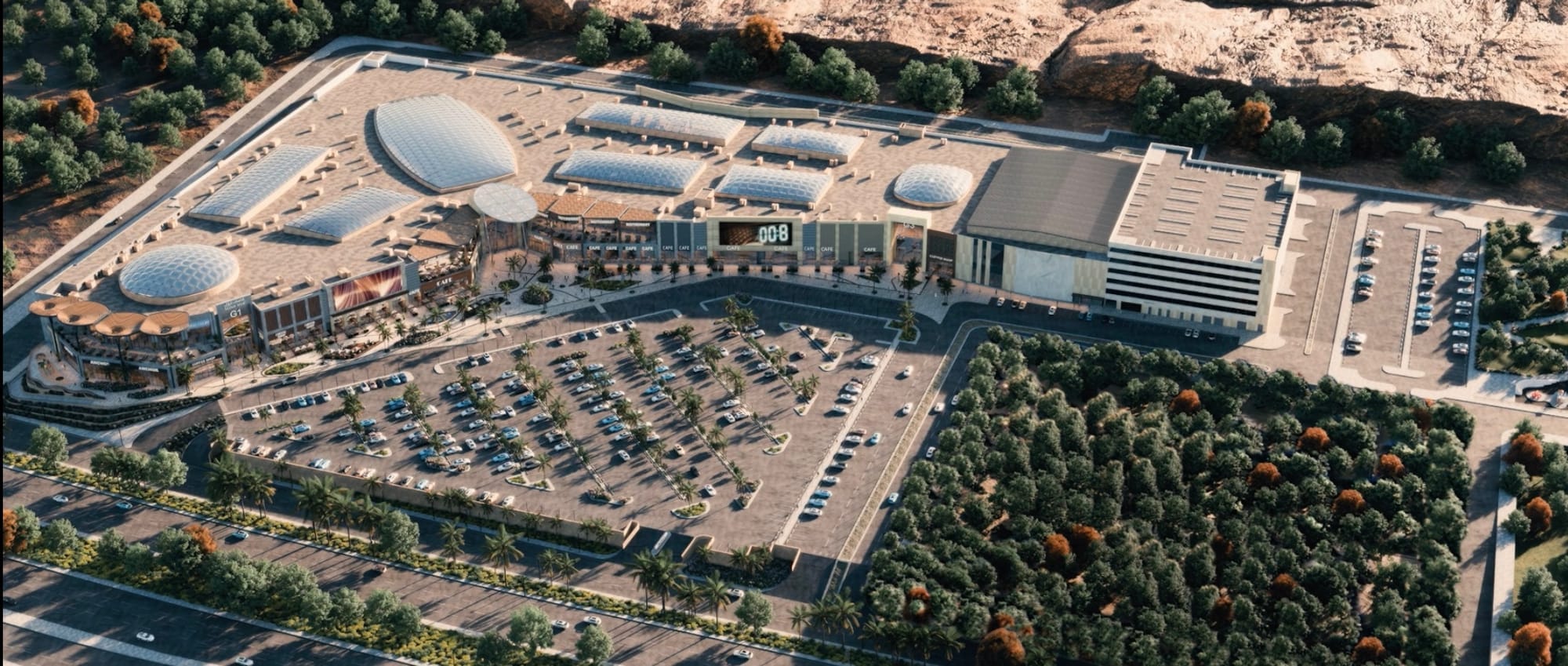
Al Huda Park — the resident bet
Al Huda Park sits on the Fourth Ring Road with, per Hamat, direct access from every district in under 13 minutes. It's roughly 50,000 sqm, with about 35,000 sqm given to 300-plus stores and the balance to food, beverage and entertainment. Hamat targets a Q1 2027 opening and projects over 12 million annual visitors — a figure worth reading as the company's ambition, not an outcome, since the asset isn't open. Early handovers have reportedly begun, with Panda Retail among the first tenants.
The thesis here is resident-led and year-round. Hamat frames Makkah as an under-served, fast-growing residential market — citing a projected population near 2.85 million and annual retail spending around SAR 145 billion by 2030 — where retail spend currently leaks to other cities. Al Huda Park's job is to keep that spend at home, and its relevance rests on locals returning weekly, not on pilgrims passing through.
This is the family-experience playbook exported intact: build for the people who live there and come back.
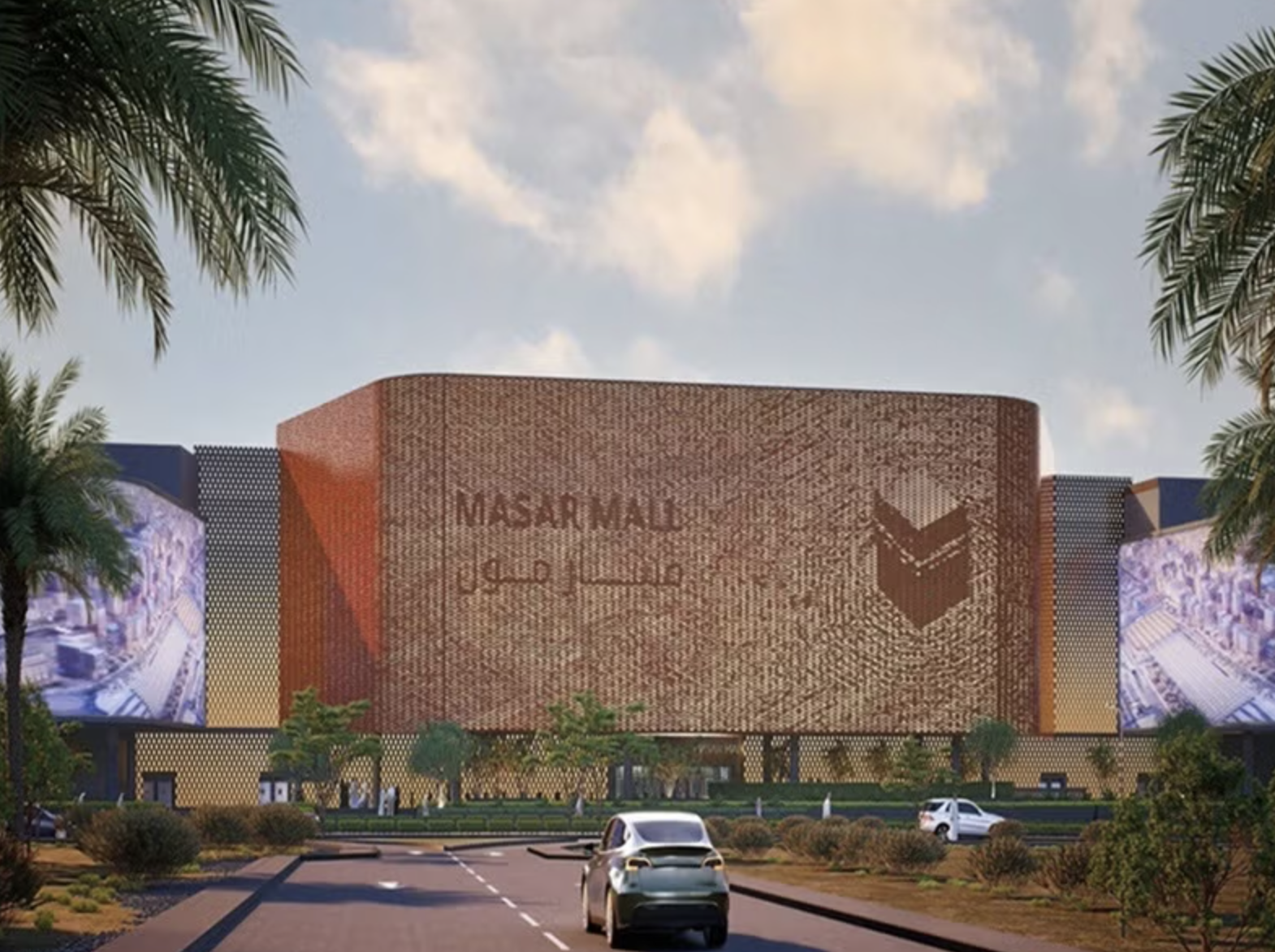
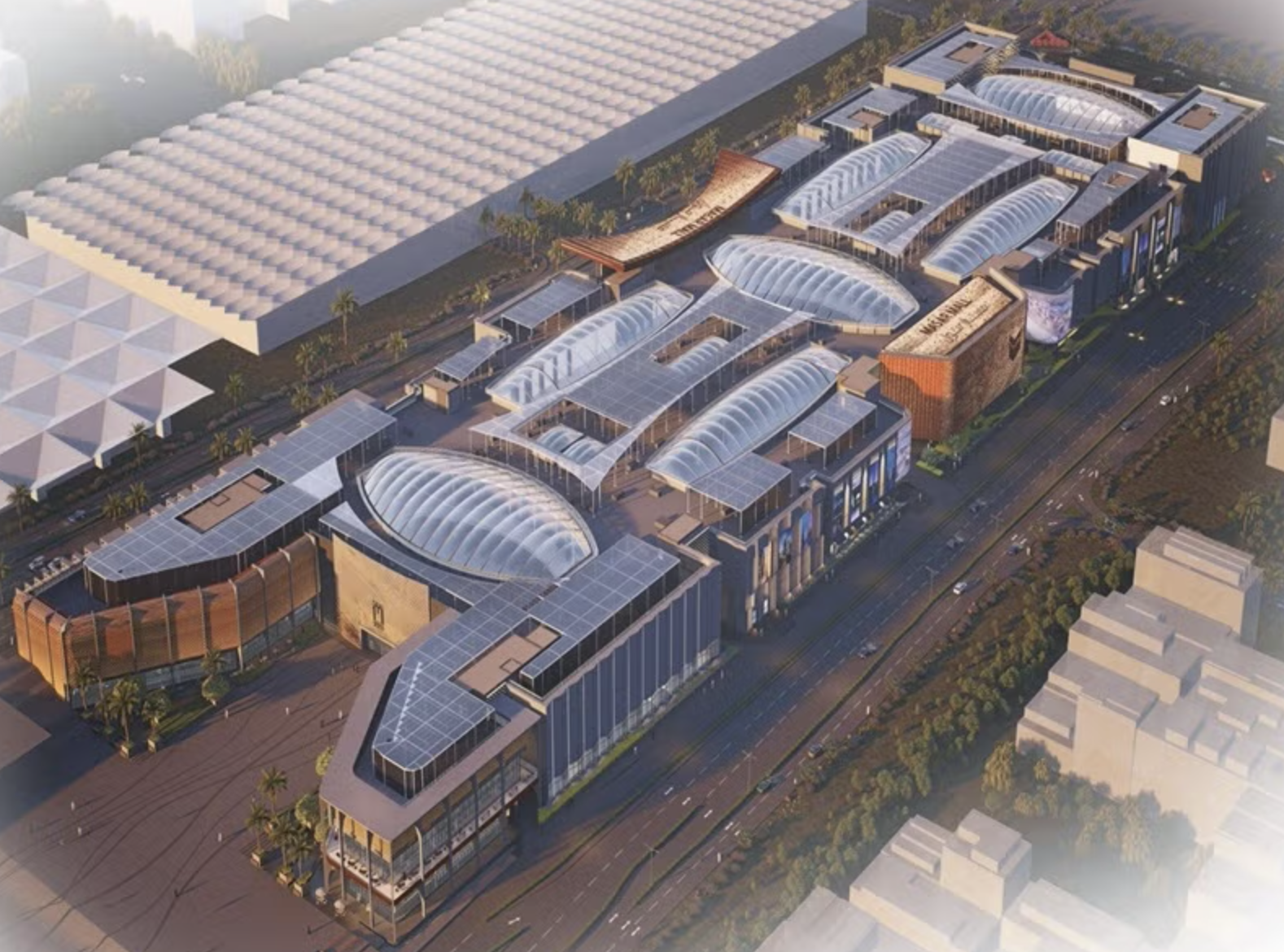
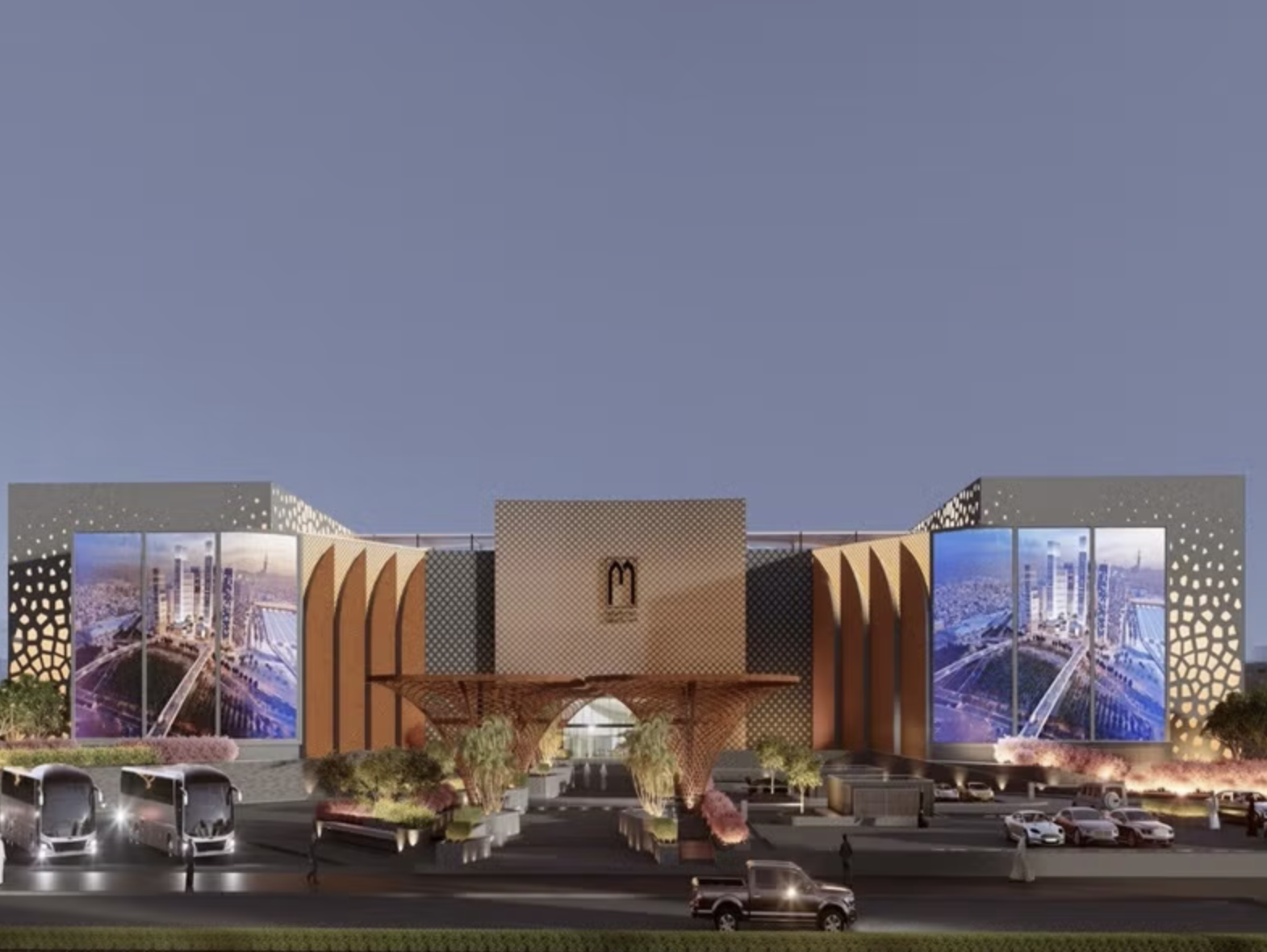
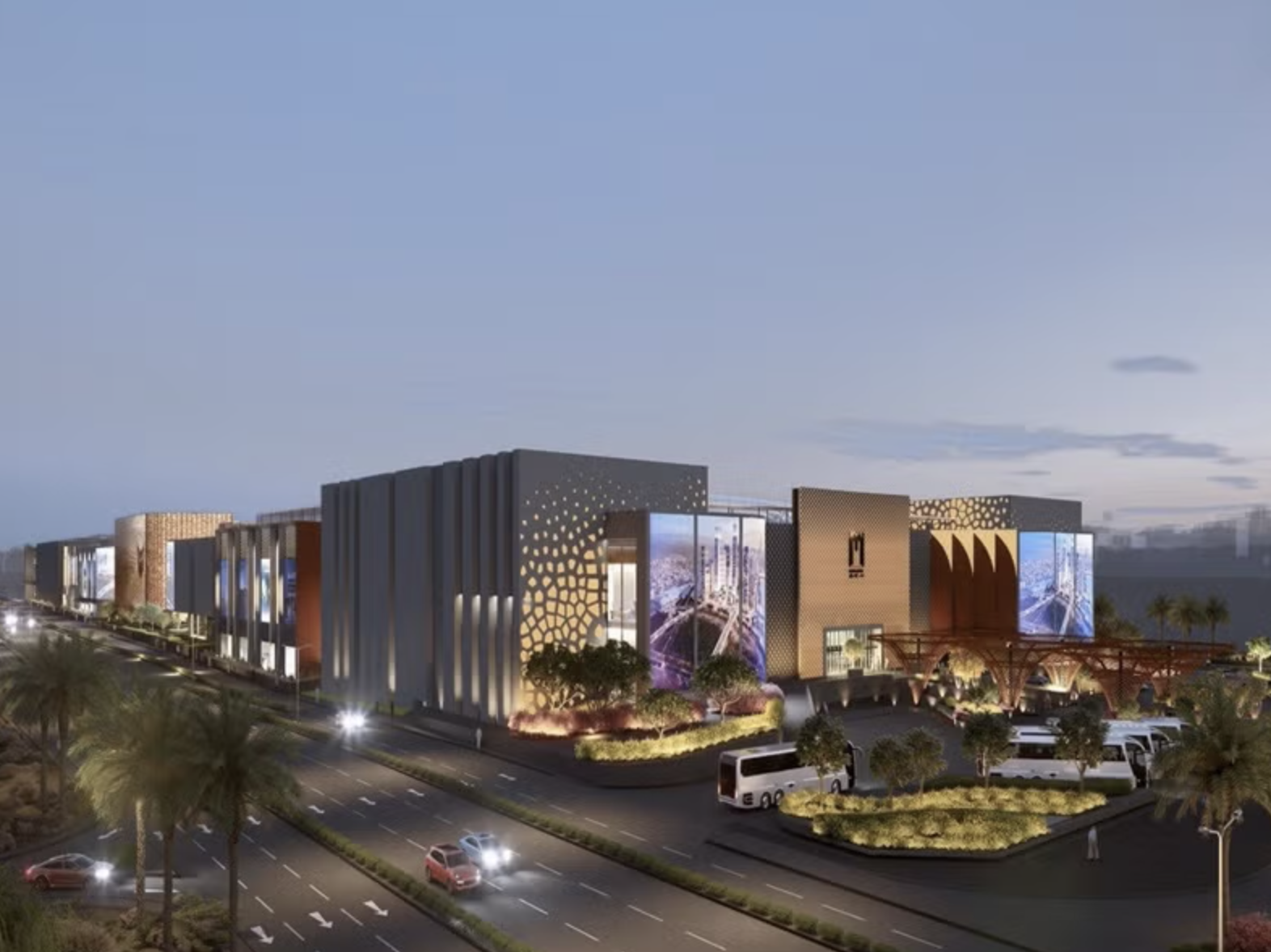
Masar Mall - Makkah - Hamat Malls
Masar Mall — the footfall bet
Masar Mall is a different animal. It sits at the western entrance of the Masar Destination, opposite the Haramain High-Speed Railway station — a roughly 71,000 sqm site carrying over 130,000 sqm of retail, on a stated investment of around SAR 2.7 billion, positioned by Hamat as the largest mall in Makkah and an ultra-luxury destination.
Its durability engine isn't the resident returning every weekend. It's the year-round global footfall of pilgrims and visitors moving through the Haram economy. That's a legitimate bet — but it's closer to a transit-and-luxury thesis than to the family-commons one, and it's worth naming the tension honestly rather than folding both assets into one tidy story.
The Results
Here the analyst has to be blunt: there are no results yet.
Every headline number attached to these Makkah assets — visitor counts, spend forecasts, "largest in Makkah" — is a Hamat projection for a building that has not opened. The family-experience strategy is plausible and grounded in real behaviour, but its central claims (longer dwell, higher repeat visitation, spend retained in-city) are exactly the things that can only be measured once the doors are open and the turnstiles are counting.
What we can assess today is the logic. What we can't yet assess is whether the logic converts.
The SOOGK Take
The strategy is sound where it's honest about human behaviour and weakest where it's asked to carry the brand's ambition.
The strongest move is the reframe from transaction to dwell time. It hedges against retail's single biggest vulnerability — the moment shopping no longer needs a building — by anchoring the asset to the uses that can't be shipped: togetherness, climate refuge, occasion. In a market where families already use malls as their default gathering place, Hamat isn't inventing demand; it's operationalising it.
The weaker part is that "family experiences" is now industry wallpaper. The label won't differentiate Hamat from anyone. Only the execution can — whether the programming and design actually produce measurably longer visits and higher return rates — and that evidence doesn't exist yet.
And Makkah exposes a real seam: Al Huda Park and Masar Mall are two theses, not one. Resident-led year-round loyalty and pilgrim-led luxury footfall are both defensible, but they're different businesses wearing the same brand. Clarity about which asset is doing which job would strengthen the story, not weaken it.
The transferable lesson isn't that malls should be family-friendly, everyone says that, and it means nothing.
It's this: experiential positioning is only durable when it formalises a behaviour people already have. Families were already treating Saudi malls as their air-conditioned town square. Hamat's bet is simply to design for the behaviour instead of interrupting it, and to make the building's value depend on the one thing e-commerce can never deliver, which is a reason to stay.


