

Saudi Arabia Is Investing in Human Capital. But What About Personal Growth?
Explore why personal growth matters to Saudi Arabia’s human capital development, with a case study on leadership, self-awareness, and resilience.


Saudi Arabia's transformation is creating new opportunities for professionals, entrepreneurs, and future leaders. Investment in education, workforce development, and emerging industries is preparing citizens for an increasingly competitive economy. Yet as professional opportunities expand, another dimension of development deserves attention: the personal growth of the people expected to lead this transformation.
Technical expertise and professional qualifications prepare individuals for jobs. But leadership, decision-making, resilience, and the ability to navigate change require capabilities that extend beyond formal education. The question is becoming increasingly relevant for Saudi Arabia: Can professional development alone prepare people for the responsibilities of a rapidly changing society?
Saudi Arabia's Human Capital Strategy Is Expanding
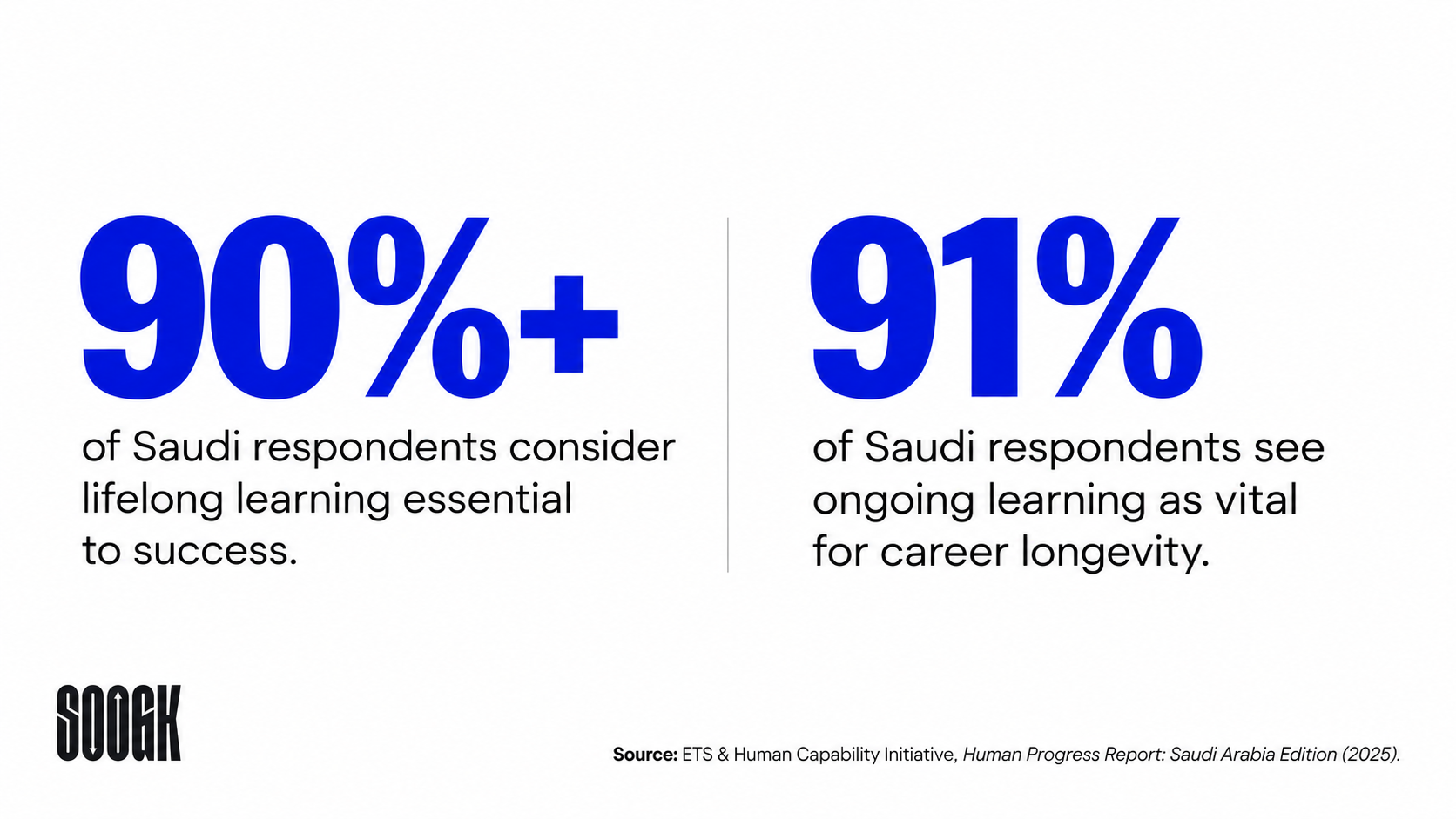
Human capability development is already a national priority under Vision 2030. The Human Capability Development Program focuses on strengthening education, developing future-ready skills, improving workforce readiness, and creating opportunities for lifelong learning.
The results are visible in Saudi Arabia's changing labour market. According to the Vision 2030 Annual Report 2025, female labour force participation reached 35%, compared with a baseline of 22.8%. The Kingdom has also raised its 2030 participation target to 40%.
These developments reflect significant changes in economic participation and professional opportunity. More people are entering workplaces, taking on leadership responsibilities, and navigating careers in industries that are evolving rapidly. But increasing access to opportunities is only part of the equation. The next challenge concerns how individuals develop the judgment, emotional maturity, and self-awareness needed to make the most of them.
A professional may have the technical qualifications to lead a team while struggling to manage conflict. An entrepreneur may succeed in building a company but find it difficult to balance ambition with personal responsibilities. A senior executive may make complex commercial decisions without giving equal attention to how those decisions affect people. These are personal development challenges with direct professional consequences.
Why Personal Development Matters to the Economy
Personal development is often associated with individual well-being or self-improvement. In a business environment, however, its relevance is much broader. Self-awareness influences how leaders respond to feedback.
Emotional intelligence affects communication and workplace relationships. Resilience helps professionals navigate uncertainty, while the ability to reflect on personal behaviour can improve judgment and decision-making.
As Saudi Arabia's economy diversifies, these capabilities become increasingly valuable. Organizations depend on employees who can adapt to unfamiliar situations, collaborate across different disciplines, and take responsibility beyond their immediate job descriptions. Leadership therefore requires continuous development that goes beyond acquiring another qualification or advancing to a higher position. This creates an opportunity for a broader conversation about human capital: one that considers not only what individuals know and can do, but also how they think, respond, and lead.
Case Study: HRH Princess Al Hanouf Mamdouh Al Saud and Rawabet
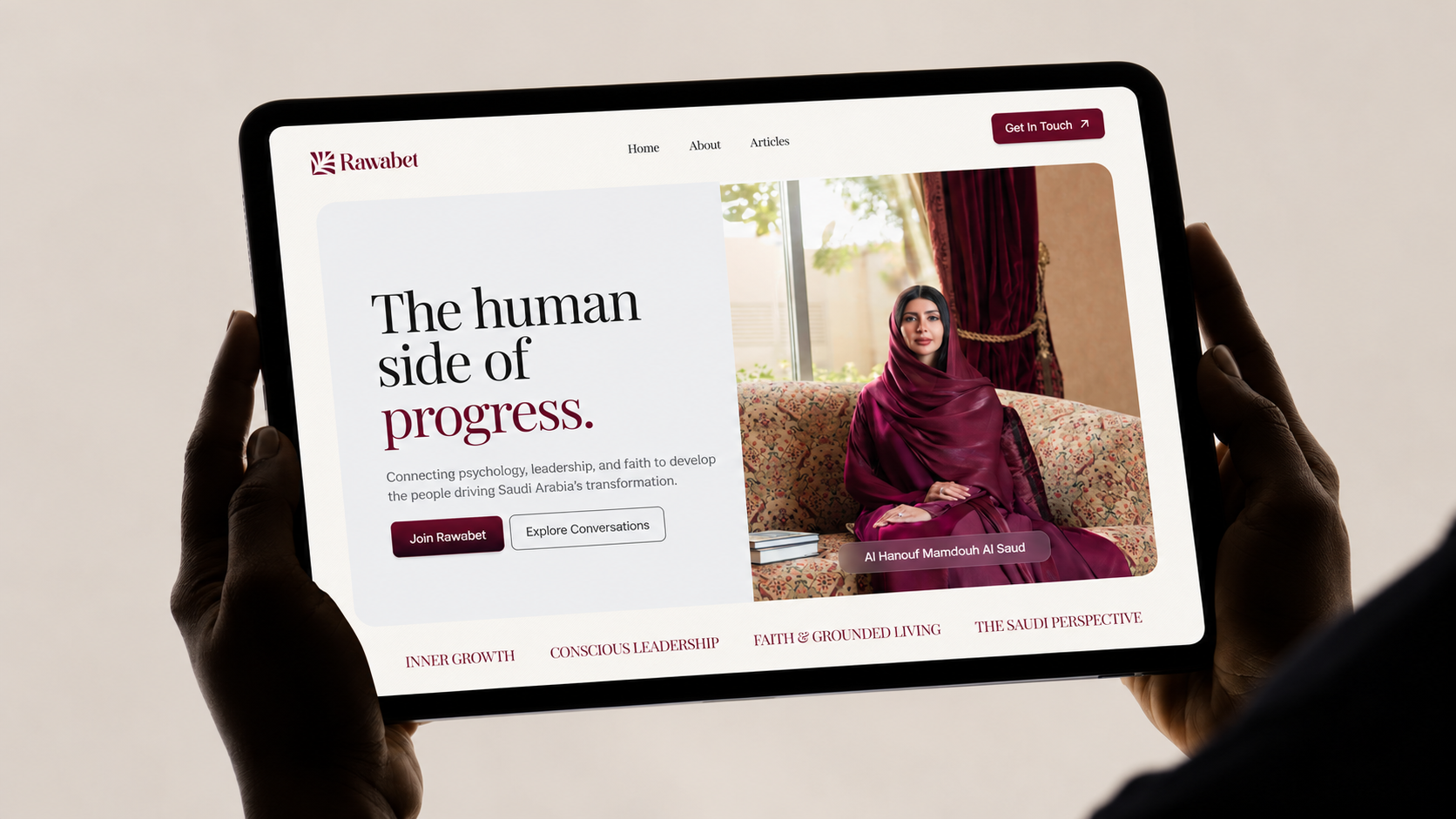
One Saudi figure contributing to this discussion is HRH Princess Al Hanouf Mamdouh Al Saud, an educator, researcher, and founder of Rawabet, a platform dedicated to exploring the human side of progress. Her work connects personal development, psychology, leadership, and faith, examining how greater self-understanding can influence the way individuals approach ambition, responsibility, and professional life.
With a background in business and continued study of positive psychology, resilience, well-being, and human behaviour from Harvard and Yale University, Al Hanouf approaches development through both professional and psychological perspectives. Through Rawabet, she brings these subjects into one conversation, encouraging individuals to consider how their personal development keeps pace with their external achievements. The platform explores four interconnected areas:
- Inner Growth
- Conscious Leadership
- The Saudi Perspective
- Faith & Grounded Living
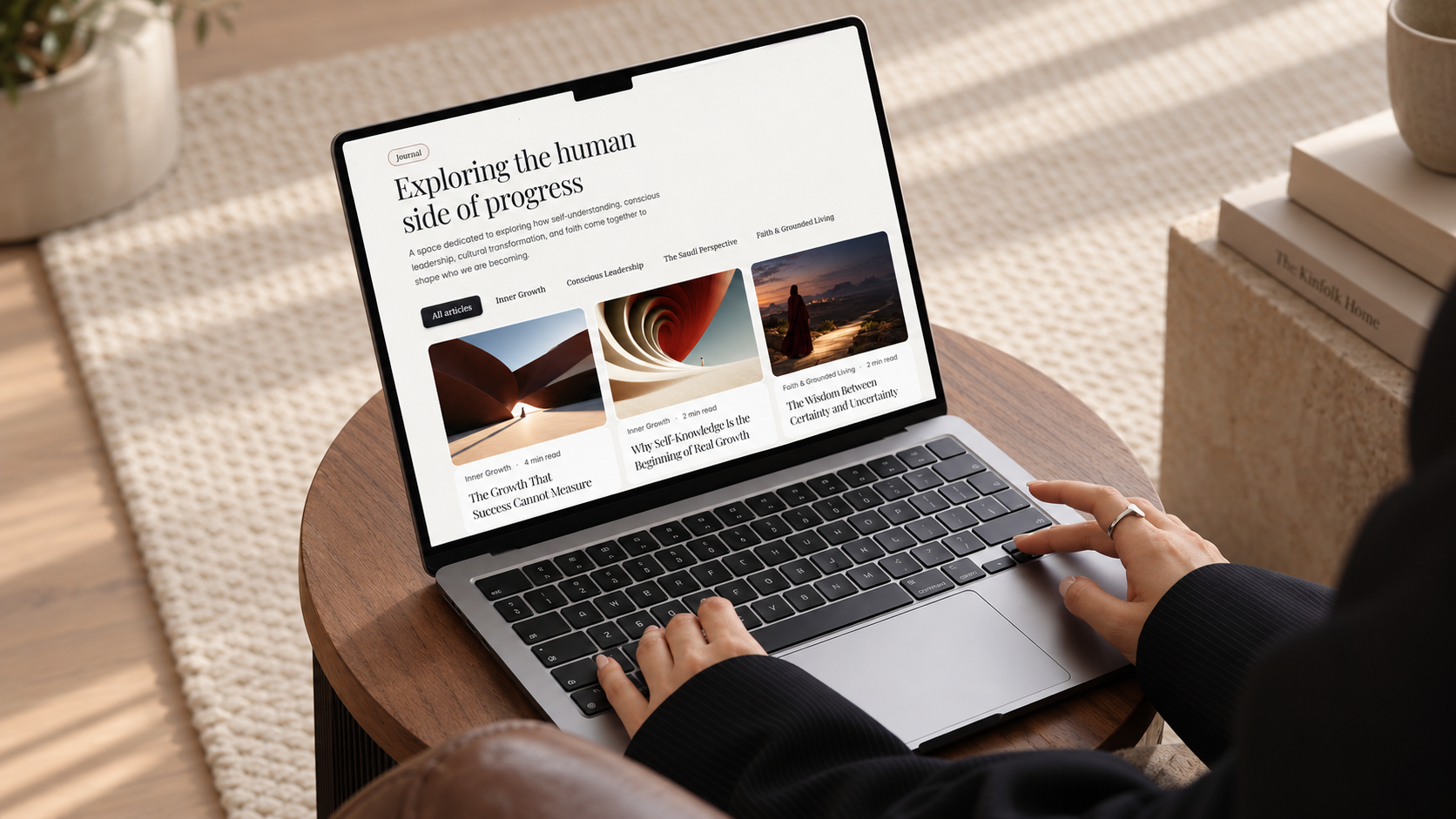
Its approach is particularly relevant to Saudi Arabia's current transformation. As individuals take on new responsibilities, Rawabet encourages reflection on the personal capabilities required to manage those responsibilities effectively. For example, its discussions on inner growth explore self-awareness, personal values, and emotional maturity. Its leadership content considers how the quality of an individual's thinking and behaviour can influence colleagues, organizations, and communities.
The Saudi Perspective connects these questions to the Kingdom's wider development, while Faith & Grounded Living considers how personal beliefs, gratitude, and reflection can support individuals through periods of change. Rather than presenting personal development as a separate activity from professional success, Rawabet examines the relationship between the two.
What Rawabet Reveals About the Next Stage of Human Development
Rawabet provides an example of how personal development can be discussed within the context of national progress. Its relevance lies in the questions it brings into focus.
As more Saudi professionals assume leadership positions, how can they develop the self-awareness needed to manage people effectively? As careers become more demanding, how can individuals pursue ambition while maintaining healthy relationships and personal well-being?
These questions are not limited to senior executives. They are relevant to entrepreneurs building businesses, young professionals entering the workforce, and individuals adjusting to the pace of social and economic change. The platform also demonstrates how conversations around personal growth can be made accessible through articles, research-informed reflections, and discussions connected to everyday experiences.
Rawabet is still a contribution to a wider conversation rather than evidence of measurable changes in workforce outcomes. Its significance is the perspective it offers on a dimension of development that can be overlooked when progress is discussed primarily through economic indicators.
The Next Human Capital Advantage
Saudi Arabia's investment in education, skills, and professional opportunities is helping prepare its workforce for the future. But global labour market trends suggest that technical qualifications alone will not be enough. According to the World Economic Forum's Future of Jobs Report 2025, 67% of surveyed employers consider resilience, flexibility, and agility essential workforce skills, while 52% identify motivation and self-awareness as core capabilities.
For businesses in Saudi Arabia, this points to an important consideration. Workforce development should extend beyond technical training to include emotional intelligence, adaptability, and leadership capabilities. As organizations expand and responsibilities increase, these skills influence how effectively employees manage change, collaborate, and lead teams.
Initiatives such as Rawabet, contribute to this conversation by encouraging individuals to develop the personal capabilities that support their professional growth. As Vision 2030 continues to reshape the Kingdom's economy, the next challenge for human capital development is not simply preparing more people for employment. It is preparing them to handle greater responsibilities, make better decisions, and lead effectively in an increasingly competitive economy.
It will also involve how effectively those people lead, make decisions, build relationships, and contribute to the society developing around them.


