

Afia Arabia Turned World Cup 2026 Fandom Into a Food Creator Showdown
Afia Arabia turned World Cup 2026 into a second competition, this time in the kitchen. Eight food creators represented national teams, competed through cooking challenges and relied on their followers to vote them into the next round.


Afia Arabia turned World Cup 2026 into a second competition, this time in the kitchen. Eight food creators represented national teams, competed through cooking challenges and relied on their followers to vote them into the next round.
Afia Arabia · Pan-Arab (MENA) · 2026 · Food / Cooking Oil
The Setup
Every World Cup creates another competition away from the pitch: the fight for audience attention.
Official sponsors activate global rights. Major advertisers recruit football stars. Creators fill social feeds. Food and beverage brands look for credible ways to become part of the cultural moment. For Afia Arabia, an everyday cooking-oil brand, the route into football was not immediately obvious. But the World Cup does not only happen inside stadiums. It happens in homes, around screens, between friends and families. Matches create gatherings, and gatherings create food occasions.
That gave Afia its way in.
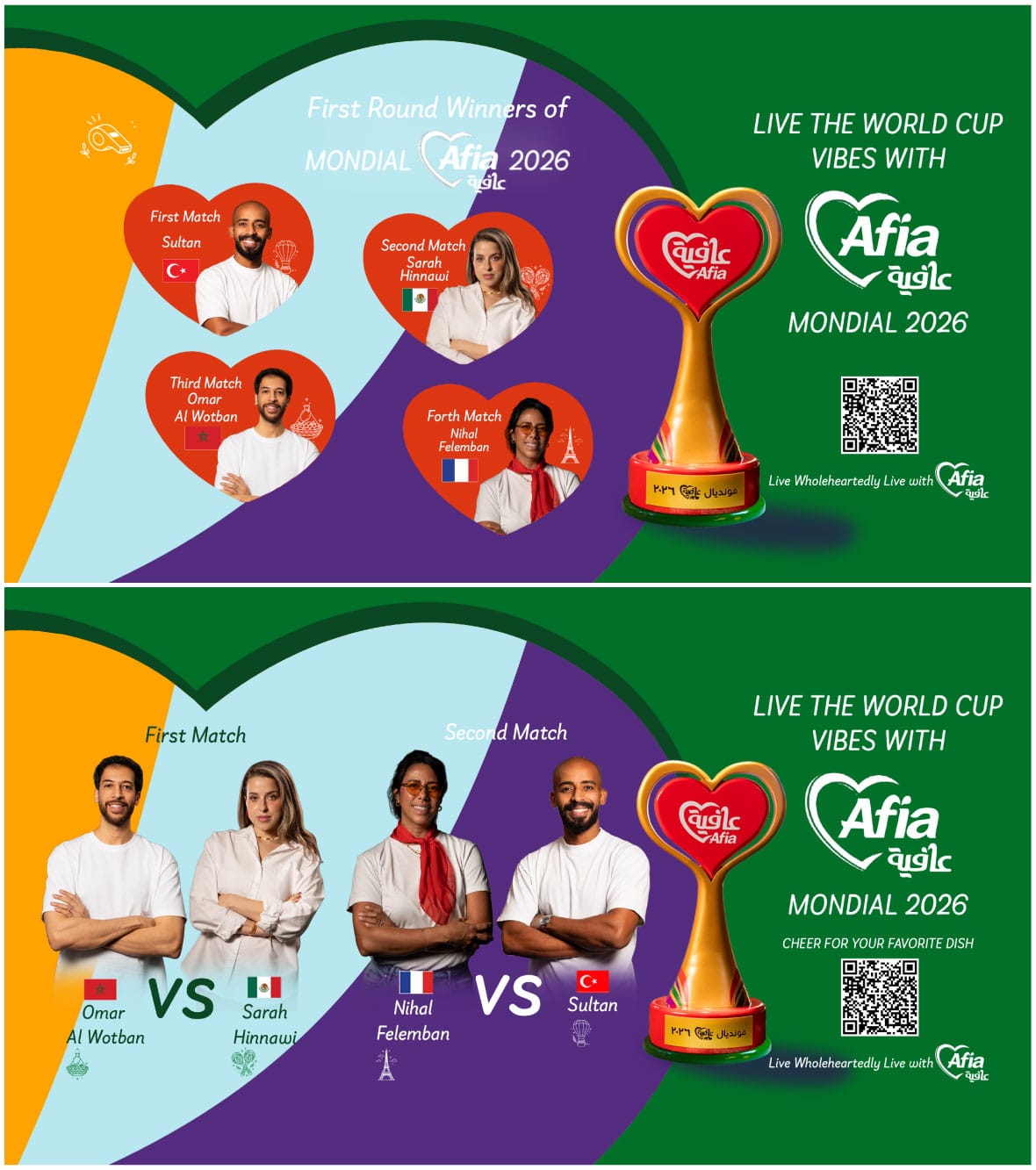
Rather than trying to make cooking oil look like football, the brand built its own social-first tournament around the behaviours people already associate with the World Cup. The premise was simple: 8 Saudi-based food creators and chefs were assigned national teams and competed through three elimination rounds, with audiences voting to decide who progressed. One tournament was happening on the pitch. Afia created another one in people's feeds.
The Insight: Everyone Arrives With Two Loyalties
Walk into a World Cup and you already have a team to support. Open your phone and you probably have creators you enjoy following. Afia brought those two loyalty systems together. A creator you regularly watched could suddenly be representing a different national team from the one you supported. That gave audiences more than one reason to take a side.
Your favourite creator is competing for another country. Who do you back: the creator you follow or the team you support?
That tension became part of the campaign's creative engine. But there was another insight underneath it. Football tournaments work because people do not simply watch. They choose sides, debate results, anticipate the next match and return to see who progresses. Afia translated those same behaviours into a cooking competition. Instead of asking people to become interested in a cooking-oil advertisement, it gave them a competition to follow.
The Idea: Afia Mondial 2026
Calling it Afia Mondial signalled the idea. This was not designed as a collection of disconnected influencer posts. It was structured as its own tournament. Eight Saudi-based food creators and chefs were assigned national teams through an opening draw. Teasers introduced the match-ups. Competitive banter established rivalries. The creators then moved into head-to-head cooking challenges across three stages:
- Round 1: Appetizers
- Round 2: Main Courses
- Final: Desserts
The recipes focused on dishes suited to gatherings and hosting, connecting the cooking challenges to the way many friends and families were already experiencing the World Cup at home. The campaign also borrowed another familiar part of football: sports commentary. A popular food creator known for his distinctive voice and witty recipe narration became Afia Mondial's dedicated commentator.
The creators became the teams. The cooking challenges became the matches. Their followers became the supporters. The commentator gave the campaign continuity, making separate creator cook-offs feel like matches within the same tournament.
Why It's Clever: Two Fandoms, One Vote
This is where the format became more than World Cup-themed content. Every creator arrived with an existing community. These were followers who already watched them because they cared about recipes, ingredients, cooking methods and food. The national-team structure added another layer of allegiance. Creator fandom could pull someone toward one competitor. Football loyalty could pull them toward another. Afia then gave audiences a way to act on those loyalties.
After each cook-off, viewers were directed to Instagram to vote for the creator they wanted to progress. The result determined who moved into the next stage. That changed the audience's relationship with the campaign. You could watch a creator compete, choose a side, vote, wait for the result and then return for the next round.
That is the creativity in one line: Afia gave people more than one reason to care, then gave them a vote that actually mattered. Most branded content is satisfied if people watch. Afia Mondial gave them a side, a stake and a reason to come back.
The Detail That Makes It Right for Afia: The Creators Were Foodies
The casting is what made the idea relevant to Afia rather than simply entertaining. The eight contracted personalities were not random celebrities placed into national-team colours. They were Saudi-based food creators and chefs whose audiences were already interested in cooking, ingredients, recipes and taste. That mattered for three reasons:
- It brought Afia into an already relevant audience. The campaign did not have to convince people to become interested in food. They were already following these creators for exactly that reason.
- It gave the products a functional role. Creators prepared appetizers, main courses and desserts using Afia products, including its locally farmed Al Jouf oil, regular cooking oil and spices. The products appeared because the competition required cooking, rather than interrupting the entertainment with a separate product message.
- It kept creators inside their natural territory. Food was already what they knew how to make engaging. The football structure simply added competition, progression and stakes.
There is an important distinction here for influencer marketing. Football stars bring fame. Food creators bring contextual authority. Their audiences already look to them for ideas about what to cook, how to prepare it and which ingredients to use. Afia did not use those creators simply to extend its reach. It made the relationship between the creators and their audiences part of the campaign itself.
The Execution
Afia Mondial ran like a tournament rather than a conventional influencer content series. The campaign included 21 Reels across Instagram, TikTok and Facebook, supported by Instagram Stories. New rounds brought new opponents, new recipes and new voting moments. 7 interactive giveaway posts provided additional opportunities to participate, with Afia product gift baskets offered as prizes.
Organic creator distribution was supported by paid amplification across Instagram and TikTok, including teaser, promotional and countdown content. But the media was there to support the competition, not replace it. The structure itself created the reason to return: another match-up was coming, another vote would open and another creator would be eliminated. The campaign understood something fundamental about tournaments: People keep watching because the outcome is still unresolved.
The Response
The numbers show what happened when Afia moved audiences from watching into participating. Afia set a campaign target of 40 million views.
It delivered:
- 42 million+ views and 7 million+ people reached
- 65 million+ impressions
- 90K tracked engagements
- 5K comments and 12.2K shares
- 29,000 votes cast to decide who advanced each round, the clearest proof the audience didn't just watch, it participated
- A reported 9× more views and 30× more comments than the brand's usual output
- And the standout signal: more than 14 creators and celebrities joined in voluntarily and unpaid, bringing a combined footprint of around 8 million followers
That last number is the one worth dwelling on. Paid reach is easy to explain; creators choosing to join a competition for free because it was fun to be part of is the kind of momentum you can't put on a media plan. It's the sign that the idea stopped being a campaign and started being an event people wanted in on.
The SOOGK Take
The lesson from Afia Mondial 2026 is not that every brand should build a tournament. It is that brands can look beneath a cultural moment and ask: what are people actually doing here? The World Cup works because people choose sides. They anticipate what comes next. They debate. They support personalities and teams. They care who progresses. And they return because the result has not been decided yet.
Afia translated those behaviours into its own category. Food creators became competitors. Recipes became matches. Followers became supporters. Voting determined progression. And all of it happened within food content, where Afia's products had a legitimate reason to appear.
Within the specific competitor World Cup posts tracked during the campaign period, Afia recorded a 65.7% Share of Voice based on captured public views, ahead of Kellogg's Noodles at 12.1%, Lay's Arabia at 11.2% and Coca-Cola at 9.9%.
That is notable because Afia did not have the most obvious advantages available to brands competing for World Cup attention. It was not relying on famous footballers or a natural association between its product category and the sport. Instead, it found the bridge in behaviour: gathering around food, choosing sides, following rivalries and waiting to see who would win. That is the more transferable creative lesson.
Do not just borrow the look of a cultural moment. Find the behaviour that makes people care about it, then work out whether your brand has a credible place inside it.
Afia found that place around the table. One competition was happening on the field. Afia gave people another one to follow online.


