

Aseer Isn't Competing With Dubai. It's Competing With the Flight to Europe.
How Discover Aseer built a summer positioning the rest of the Gulf physically cannot copy, and why that makes it the most defensible move in regional destination marketing.


How Discover Aseer built a summer positioning the rest of the Gulf physically cannot copy — and why that makes it the most defensible move in regional destination marketing.
Every summer, the Gulf empties out.
When Riyadh, Dubai, Doha and Kuwait City push past 45°C, a predictable migration begins: families board flights to Istanbul, the French Riviera, Georgia, Baku, Bali. The behavior is not a preference. It is structural. Extreme summer heat has been pushing GCC residents toward cooler climates for decades, and the outbound travel industry is built around it.
Most destination marketing inside the Gulf tries to win a share of the domestic staycation, to be chosen over the mall, the hotel pool, the neighboring city. Aseer is playing a different game.
Its real competitor isn't another destination. It's the boarding gate.
That single reframe is what makes the Discover Aseer positioning worth studying. The region isn't asking Gulf travelers to pick it over Dubai. It's asking them to not get on the plane at all.
The Market
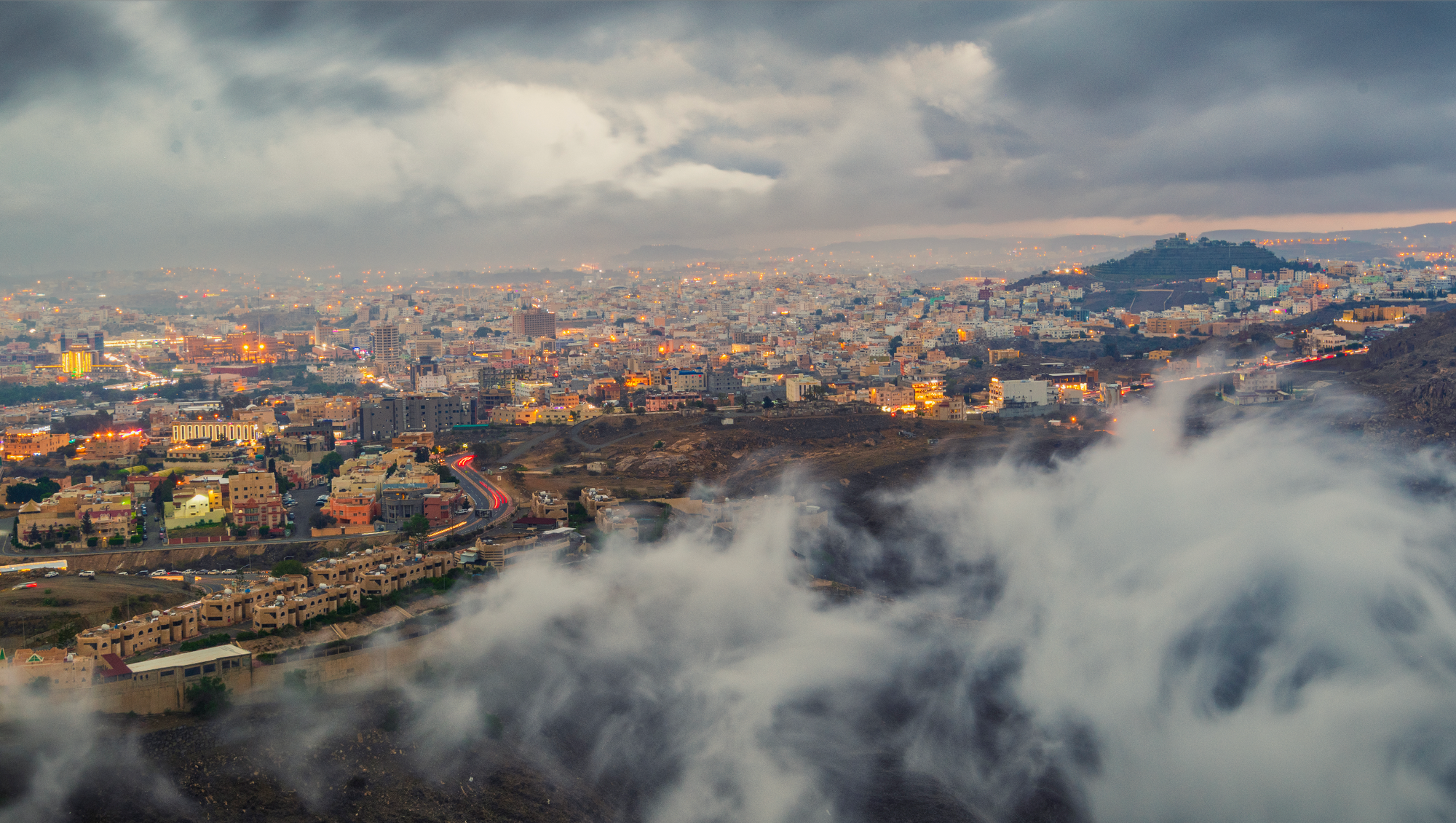
The summer exodus from the Gulf is one of the most reliable consumer behaviors in the region. Outbound demand spikes twice, once around Eid Al-Adha, once at the start of the school break — and the money follows the cool air: Turkey, Italy, France, the Caucasus, Southeast Asia.
Within the region, only one destination has genuinely owned the "cool summer" slot: Salalah, in Oman, whose Khareef monsoon turns the coast misty and green with temperatures in the low 20s while everywhere else bakes. Salalah is the proof that the demand exists — and the benchmark Aseer is implicitly measured against.
Two forces have widened the opening.
The first is Vision 2030, which has a direct economic interest in keeping tourism spend inside the Kingdom and converting outbound travelers into domestic ones.
The second is quieter but more interesting: Europe is warming at roughly twice the global average. Mediterranean peak-summer heat is becoming less dependable, and Gulf travel agents are already reporting clients shifting toward cooler, shoulder-season and non-Mediterranean options. The traditional summer escape is becoming less of a sure thing — which is precisely when an alternative gets a hearing.
The Challenge
Saudi Arabia does not have a shortage of regions marketing themselves. It has the opposite problem.
Heritage, hospitality, "hidden gem," authentic culture, untouched nature, the vocabulary of Saudi and Gulf destination marketing is close to interchangeable. When every region claims to be undiscovered and unique, none of it differentiates.
So the challenge for Aseer was never awareness. It was selection: how do you get chosen in a category where uniqueness is the default claim and therefore means nothing?
The Insight
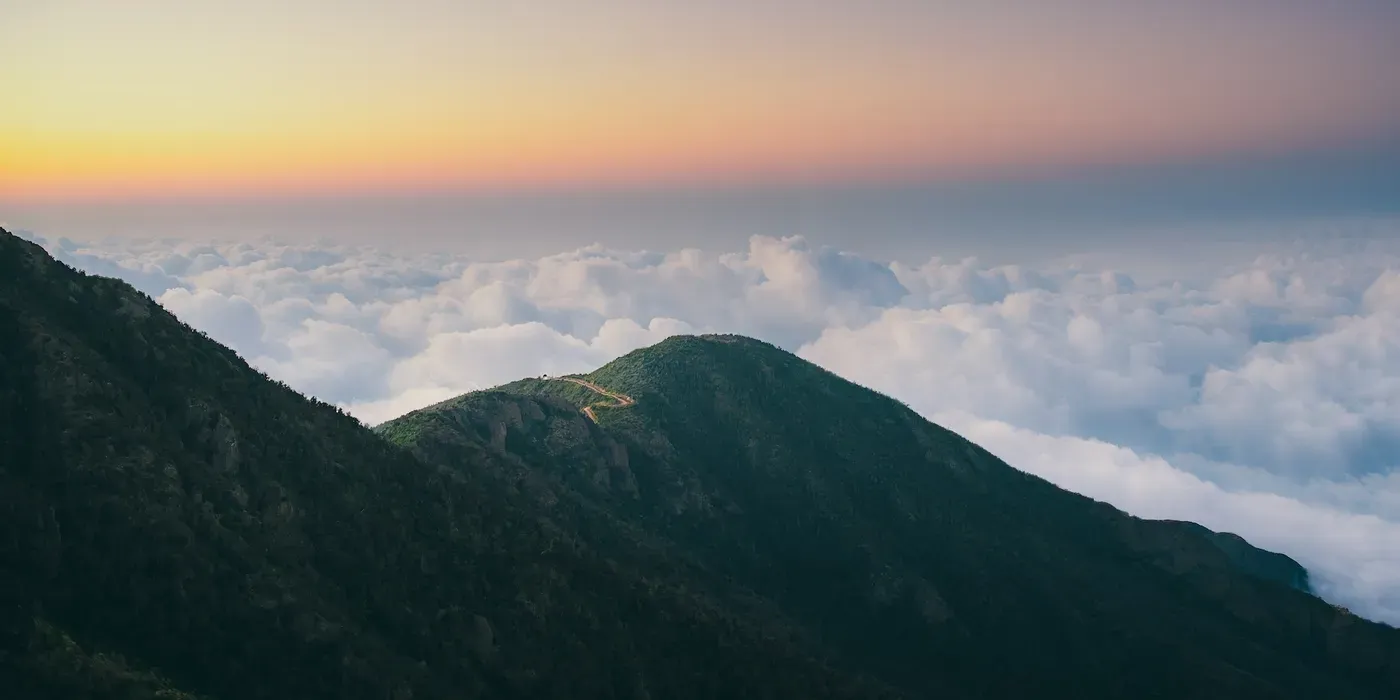
Aseer has one asset no rival in the Gulf can manufacture: altitude.
Abha, its principal city, sits at roughly 2,270 metres and holds around 27°C at the height of summer. Al Baha, up the same highland spine, can dip toward 18°C. This is not a positioning line that a competitor can borrow, out-spend, or rebrand its way into. It is a fact of geography.
Everything else in destination marketing is a claim. Cool, in Aseer, is a measurement.
The insight isn't "Aseer is beautiful." It's that Aseer already delivers the exact benefit Gulf families leave the country to buy — closer, cheaper, and without a passport.
That is the difference between a feature and a strategy. The mountains were always there. What the work got right was connecting them to a behavior people already have, rather than inventing a new reason to visit.
The Strategy: "Cooler & Closer"
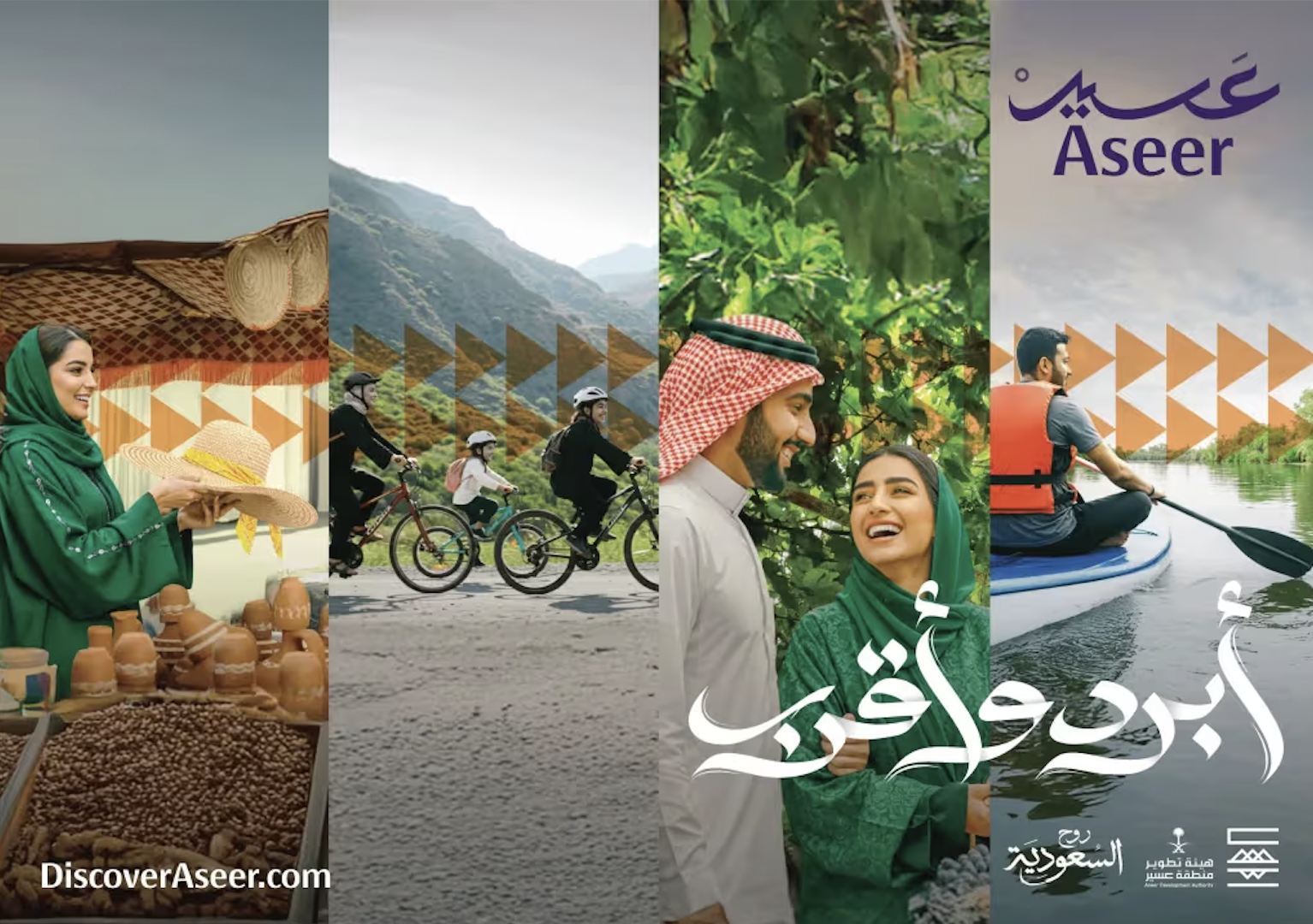
The 2025 summer season carried a theme that, unusually for tourism marketing, actually stated the strategy out loud: "Cooler & Closer."
Two words, two axes of advantage. Cooler is the climate benefit — the physical truth. Closer is the proximity and friction advantage — a short domestic flight, no visa, no currency, no European airfare, for the Saudi and wider GCC traveler. That line is doing genuine strategic work. It names the competitor (long-haul summer travel) without naming it, and it answers the traveler's real question, which was never "is Aseer nice?" but "why here instead of there?"
The 2026 season, themed "Live the Sky," moves up the ladder — from rational benefit to emotional and experiential register. That sequencing is sound: you earn the right to sell wonder only after you've established the reason to show up. The rational claim ("cooler and closer") comes first; the aspirational one ("live the sky") builds on top of it.
Sitting above both is the stated ambition of the Aseer Development Authority: a year-round global destination. Summer is not the whole strategy. It's the wedge — the season where Aseer's advantage is at its most undeniable, used to open a door that heritage, coast and cuisine are meant to keep open the rest of the year.
The Idea
The creative idea isn't a single campaign. It's an operating system: Discover Aseer as the unifying brand for a region that is, geographically, four different places.
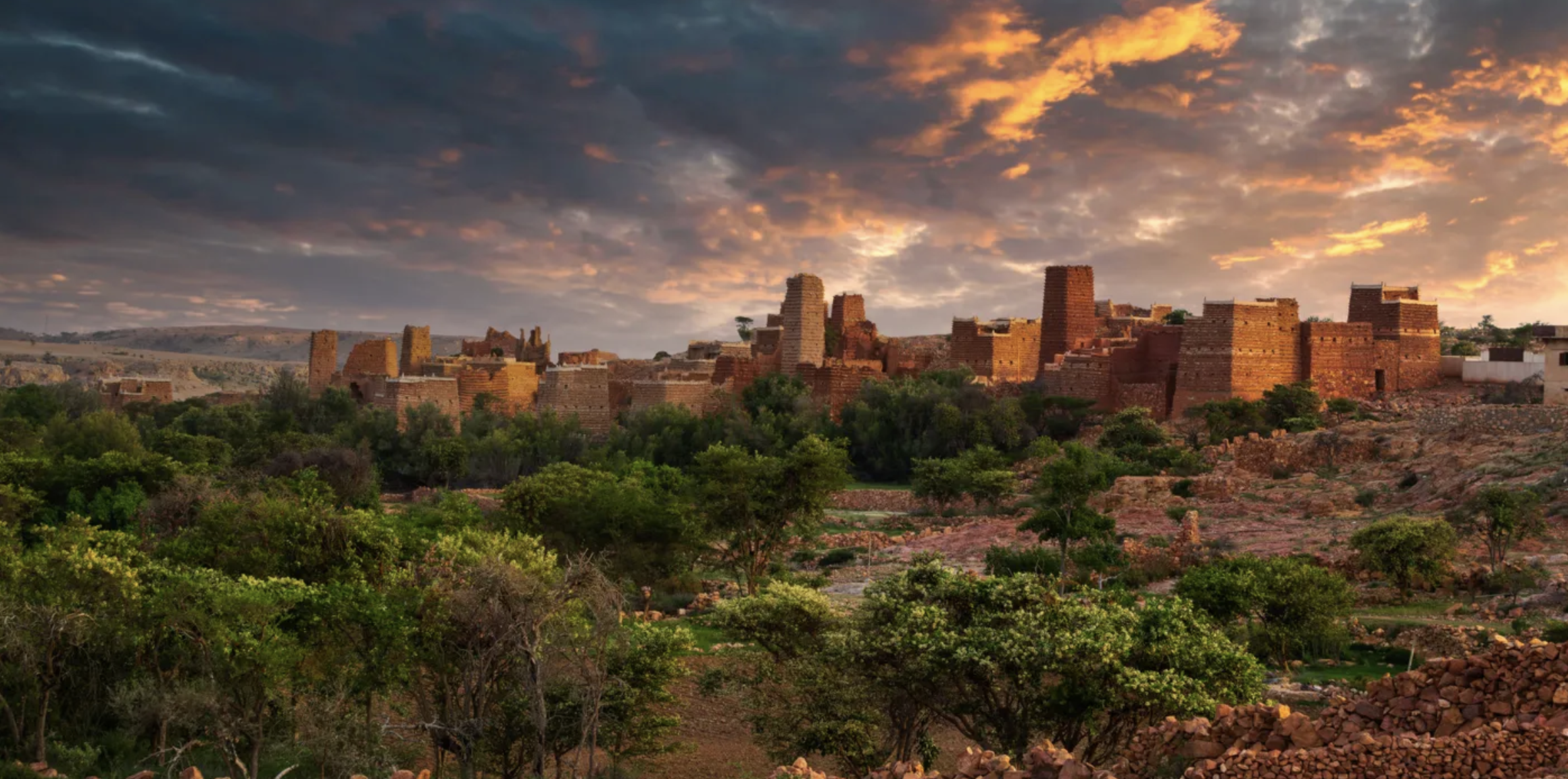
Aseer contains mountains (Abha, the Sarawat range), a Red Sea coastline (Al Birk), desert (Bisha), and stone heritage villages (Rijal Almaa) — plus a distinct culinary identity. Left unmanaged, that diversity dilutes the message. A destination that is everything is usually nothing.
The move was to treat the range not as a branding problem but as the proof of the "year-round" claim. Mountains carry the summer. Coast and desert are the argument for winter. The geographic spread that could have fractured the brand is repositioned as the evidence for its most ambitious promise.
The Execution
The Discover Aseer platform is built as a planning layer, not a brochure:
- An interactive map covering destinations, heritage sites, farms, markets, camping and caravan sites, restaurants and accommodation.
- An AI-powered Smart Trip Planner (in beta) — a signal that the region is competing on planning friction, the exact point where a domestic trip usually loses to a packaged overseas one.
- 100+ bookable experiences and events curated around the seasons, from mountain hiking to Aseeri cooking.
The most quietly effective execution choice is the gastronomy credential. Aseer was named IGCAT World Region of Gastronomy 2024 — by its own account the first non-European region to hold the title — and cited among IGCAT's Top 10 Foodie Destinations for 2026. This matters because it's borrowed credibility from an external body, not a self-declared superlative. In a category drowning in its own adjectives, a third-party designation does work that no amount of brand copy can.
The same discipline shows in the region's memberships of UN Tourism, the Global Sustainable Tourism Council (GSTC) and PATA — affiliations that position Aseer inside recognized international frameworks rather than asking to be taken on trust.
Behind the marketing sits real capital. The authority reports more than SAR 444 million in new hospitality projects launching across the region in 2026, within a broader development strategy the Crown Prince launched at a scale of roughly SAR 50 billion. The positioning, in other words, is being underwritten by supply, not just promotion.
The Distribution
Distribution runs on three tracks.
Owned and social: an active, multi-platform presence — TikTok, Instagram, Snapchat, YouTube, X — matched to where Gulf audiences actually plan and dream about travel.
National framework: the summer season is folded into the Kingdom-wide Saudi Summer Program, borrowing national reach and calendar salience rather than competing against it.
Regional and trade: the authority has taken Aseer to the Arabian Travel Market in Dubai — a clear signal that the target isn't only domestic. The "closer" in "cooler and closer" is aimed at the whole GCC, not just Saudi nationals.
The Results
Here the discipline that SOOGK cares about matters most: separating what is reported from what is proven.
What the authority reports: ASDA states the region drew close to 8 million visitors in 2024, up from around 3 million in 2023, and has set a target of 3 million-plus visitors and roughly 3,000 seasonal jobs for the 2026 summer season across 100+ experiences.
These are the region's own numbers, and they should be read as such rather than as independently audited results.
What the numbers appear to prove: demand is real and growing quickly, and the summer-cool proposition is resonating at meaningful scale. A near-tripling of reported visitors in a single year is not noise.
What they don't yet establish: the composition of that audience. The growth is almost certainly still weighted toward domestic travelers, which means the "global destination" ambition remains a target, not an outcome. The evidence available today supports "national, with early GCC traction" more than it supports "global." That's not a criticism of the trajectory — it's a caution against reading the aspiration as the achievement.
The SOOGK Take
What's strong: the positioning is the hardest kind to attack, because it isn't a claim — it's a physical truth wired to an existing behavior. Competitors can copy an experience, a hashtag, a festival, a visual identity. They cannot copy an altitude. And because Aseer's summer benefit maps onto a migration Gulf families are already making every year, the marketing didn't have to create demand. It had to redirect it. That is a far cheaper and more durable job.
What could be stronger: the year-round story is still carried, in practice, by summer. The mountain-and-cool narrative is sharp and repeatable; the coast, desert and winter propositions are comparatively under-told, which leaves the "all-year" claim resting more on ambition than on an equally vivid off-season idea. The model is also exposed to two dependencies worth watching — air connectivity (the "closer" advantage collapses without reliable, affordable domestic and GCC routes) and seasonal concentration (a destination whose defining asset is summer coolness has to work hard to matter in February). Neither is a flaw in the positioning. Both are the bill that comes with it.
The transferable lesson — and it applies well beyond tourism:
Durable positioning rarely comes from claiming you're unique. It comes from owning a truth your competitors physically cannot replicate, and then attaching it to a behavior your audience already has.
Aseer's cool summer was not a campaign idea. It was a fact of geography that the marketing had the discipline to build around instead of over. The temptation with a region this photogenic would have been to sell wonder first. Instead, the work led with a reason — cooler, closer — and earned the wonder later.
Most destinations invent a difference and hope the audience believes it. Aseer found a difference it didn't have to invent, and pointed it at a plane ticket people were already buying.
That's the move worth stealing.


